
Non-linear targeting in Google Ads reaches the right buyer indirectly, through adjacent interests, behaviors, and life events, instead of chasing the exact keyword they might type. Think of it as finding a needle by buying the whole haystack, then using sharp creative to pull the needle out. When search demand is thin, when the cost per click has climbed past what the math allows, or when a sensitive category blocks direct targeting, this approach puts your ad in front of people who fit, even though they never searched for you by name.
This guide explains what non-linear targeting in Google Ads actually looks like, who should use it, and how to build a strategy in three clear steps. You will also get a worked audience example, a measurement guardrail so spend stays honest, and the cases where a plain keyword campaign still wins.
Key Takeaways
- Target the overlap, not the exact term. Reach buyers through affinity, in-market, life event, and demographic segments that contain your ideal customer.
- Creative does the qualifying. Sharp messaging attracts the right fit and repels the wrong one, which keeps a broad audience efficient.
- Demand Gen is the home for this. It pairs adjacent audiences with strong visual creative across YouTube, Discover, and Gmail.
- Measurement keeps it honest. Robust conversion tracking and Smart Bidding turn a wide net into profitable reach.
- It is not always right. When real search demand exists and CPCs are affordable, direct keyword targeting still wins.
What Is Non-Linear Targeting In Google Ads?
Linear targeting draws a straight line from a search term to a click: someone types “emergency plumber,” you bid on that term, they convert. Non-linear targeting takes the scenic route. Rather than wait for the exact query, you identify the audiences your ideal customer already sits inside and reach them there.
A person shopping for a mattress rarely announces it. Someone in the “Moving” life event segment, though, will often need one soon. Targeting the move instead of the mattress reaches the buyer earlier, at a lower cost, and before rivals crowd the obvious in-market term. That is the whole idea: pick the behavior that predicts the purchase, not the word that describes it.
Who Should Use Non-Linear Targeting?
This approach earns its keep in a few specific situations. If none of these describe you, a direct campaign is probably the simpler bet.
- High cost per click. When the obvious keywords cost more than a conversion can justify, an adjacent audience often delivers the same buyer for less.
- Little or no search demand. New categories and early-stage products have no queries to bid on, so you have to reach demand before it forms.
- Sensitive categories. Healthcare, finance, and legal advertisers face targeting limits, and reaching an earlier, related need keeps campaigns compliant.
- Scaling past a known audience. Once you exhaust your perfect segment, adjacent audiences are where the next block of growth lives.
For niches where every click is expensive, this pairs well with the tactics in our guide to PPC and Google Ads for high-value professional niches.
How Do You Build A Non-Linear Targeting Strategy?
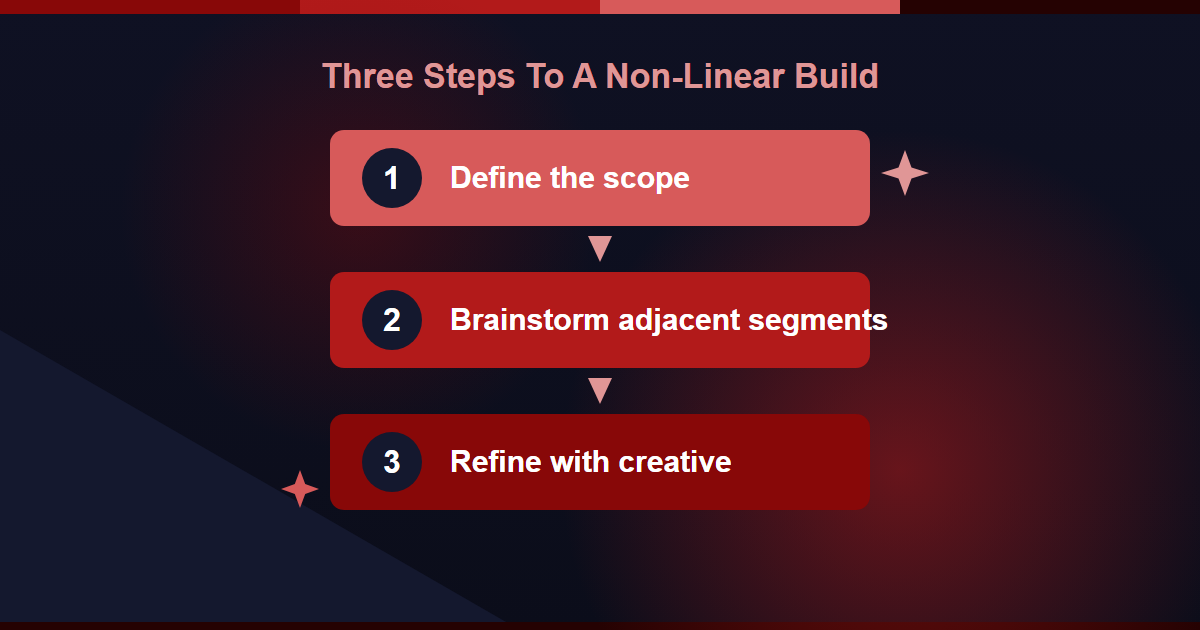
Build it in three steps, in order. Each one narrows a broad reach into a profitable one.
1. Define The Scope
Write down two lists: who actively searches for your offer, and who your ideal customer really is. The gap between them is where non-linear targeting works. A wedding photographer’s searcher types “wedding photographer near me,” but the ideal customer is simply someone recently engaged, a far larger and cheaper group to reach.
2. Brainstorm Adjacent Segments
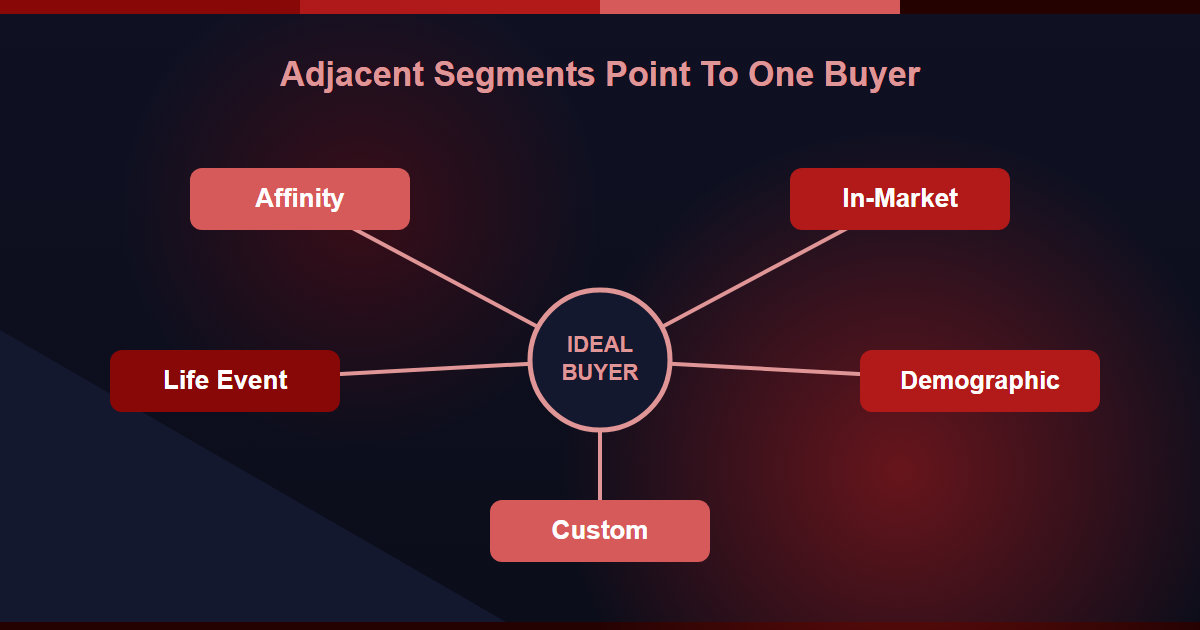
List the Google audiences that contain your buyer. Mix segment types so you triangulate the same person from several angles.
- Affinity segments for long-term interests and lifestyle.
- In-market segments for people actively researching a related purchase.
- Life event segments for moments that trigger new needs, such as moving, marrying, or graduating.
- Demographic and custom segments to sharpen by age, parental status, or your own keyword and URL signals.
3. Refine With Creative
Because the audience is broad, your ad has to sort it. Name the customer in the creative, speak to the specific moment, and state the offer plainly so the wrong fit scrolls past. Good creative here does the qualifying that a keyword would have done in a linear campaign.
A Worked Example: Adjacent Audiences In Action
Say you sell premium anti-aging skincare. The direct in-market term is fierce and pricey. A non-linear build reaches the same buyer through overlapping signals instead.
| Goal | Linear target | Non-linear segments |
|---|---|---|
| Anti-aging skincare buyer | In-market: Anti-aging skincare | Affinity: Beauty Mavens + Life Event: Getting Married Soon + Demographic: 35 to 54 |
| New mattress buyer | In-market: Mattresses | Life Event: Moving + Affinity: Home Decor Enthusiasts |
| Financial advisor client | Keyword: financial advisor | Life Event: New Job + In-Market: Home Buying |
Each row trades one crowded term for two or three cheaper signals that, stacked together, describe the same person. Layering audiences like this is the same audience-first thinking behind a strong Meta Ads playbook.
Where Non-Linear Targeting Lives: Demand Gen
Demand Gen campaigns suit this strategy best. They serve visual, social-style creative across YouTube, Discover, and Gmail, and they let you stack Google’s affinity, in-market, life event, demographic, and custom segments into one audience. The format rewards a strong hook, which matters because your creative carries the qualifying load.
Two requirements make or break it. First, robust conversion tracking, so the system learns who actually converts, not just who clicks. Second, a Smart Bidding strategy tied to that conversion data, which turns a wide audience into efficient spend. Without both, a broad net just burns budget, the same trap we describe in ChatGPT Ads conversion bidding.
Keep The Scenic Route Profitable
A wider audience only pays off if you watch the return closely. Set a target cost per acquisition or ROAS goal up front, give each audience test enough conversions to judge fairly, and cut segments that drift over your target. Because you are reaching people earlier in their journey, expect a longer path to conversion and hold your nerve through the learning period rather than front-loading budget on day one, a mistake we unpack in why front-loading ad spend backfires.
You can review Google’s own documentation on Demand Gen campaigns and the full Demand Gen audiences overview for the current segment options.
Frequently Asked Questions
What is non-linear targeting in Google Ads?
Non-linear targeting in Google Ads reaches your ideal customer through adjacent interests, behaviors, and life events rather than the exact keyword they might search. You target the audience your buyer already sits inside, then use creative to qualify the right fit.
How is it different from keyword targeting?
Keyword targeting waits for a direct search and bids on that term. Non-linear targeting reaches buyers before or around that moment through related segments, which lowers cost and finds demand that has not surfaced as a query yet.
Which campaign type works best for non-linear targeting?
Demand Gen campaigns fit best. They combine affinity, in-market, life event, demographic, and custom segments with visual creative across YouTube, Discover, and Gmail, which is exactly what an adjacent-audience strategy needs.
Do I still need conversion tracking and Smart Bidding?
Yes. Robust conversion tracking teaches the system who really converts, and a Smart Bidding strategy uses that data to keep a broad audience efficient. Without both, non-linear targeting tends to waste spend.
When should I avoid non-linear targeting?
Skip it when clear search demand exists and the keywords are affordable. In that case a direct, linear campaign captures ready buyers faster and with less guesswork.
Make Keywords Optional, Not Mandatory
Non-linear targeting in Google Ads gives you a way to grow when the direct route is blocked, priced out, or simply empty. Map who your buyer really is, reach them through the adjacent segments that predict the purchase, let creative sort the crowd, and hold every audience to a clear return goal. Treat keywords as one road to the customer rather than the only one, and you open reach that a purely linear account never sees.